
Most travel itineraries organize a journey by geography or history, but Rajasthan is best understood through its visual palette. The state's four most iconic cities - Jaipur, Jodhpur, Jaisalmer and Udaipur - each carry a signature hue rooted in royal decree, indigenous materials, climatic adaptation, and ancient symbolism.
Jaipur - Terracotta Pink
Jaipur’s terracotta blush dates back to 1876, when Maharaja Sawai Ram Singh ordered the entire walled city painted pink - the traditional color of hospitality - to welcome the Prince of Wales. The color was later codified into local law to maintain its uniformity.
The Visual Signature: The honeycombed facade of Hawa Mahal and the surrounding bazaar gates glow in warm, dusty rose under the morning sun.
Beyond the Paint: The blush tone is naturally mirrored in the local red and pink sandstone used to build Amer Fort.
Jodhpur - Indigo Blue
Standing on the ramparts of the towering Mehrangarh Fort reveals a sea of cobalt and indigo rooftops sprawling beneath the cliffside.
The Origin: The blue wash began as a way for Brahmin priests to distinguish their dwellings, but the practice spread widely because indigo-infused whitewash acts as a natural insect repellent and reflects intense desert heat.
The Experience: Navigating the labyrinthine alleys of the Brahmpuri quarter offers shaded, electric-blue corridors that stay noticeably cooler than the open squares.
Jaisalmer - Honey Gold
Deep in the Thar Desert, Jaisalmer appears as though it rose directly out of the surrounding sand dunes.
The Stone: The city’s moniker comes from the local yellow Jurassic sandstone. Under the midday sun, it takes on a tawny yellow hue, but during sunrise and sunset, the mineral-rich stone catches the light and blazes like molten gold.
The Living Fortress: Inside Sonar Kella (The Golden Fort), intricately carved jharokhas (overhanging enclosed balconies) and haveli facades carry the same seamless honey tone from base to turret.
Udaipur - Shimmering White
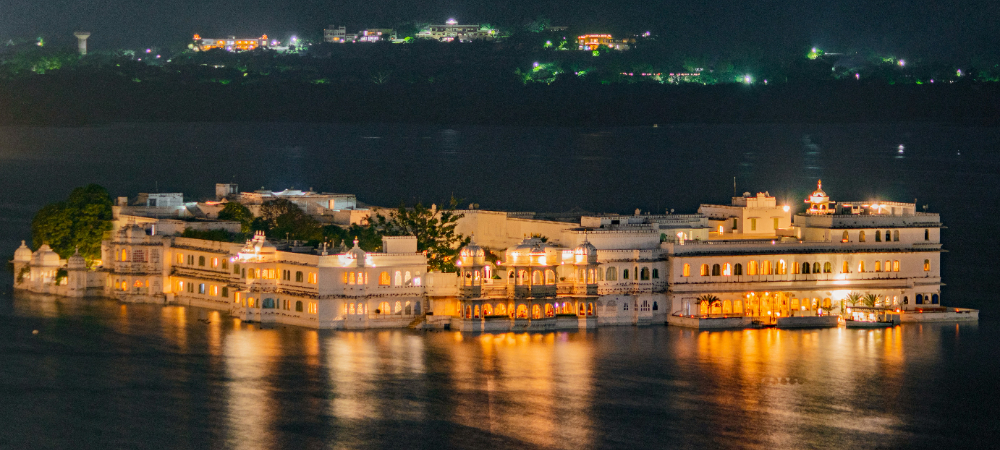
Set along the Aravalli hills, Udaipur trades desert dust for luminous white marble and pale limestone facades reflected across Lake Pichola.
The Aesthetic: Founded by Maharana Udai Singh II, the city’s royal architecture - from the sprawling City Palace to the floating Taj Lake Palace - uses whitewashed stone and polished white marble to evoke lightness and serenity.
The Golden Hour: Sunset boat rides show the city shifting from bright alabaster to soft silver as dusk settles over the water.
